
Let's start here
Introducing a lemon vibrator into your shared sex life is not about fixing anything. It's about curiosity. And here's the thing about curiosity in long-term partnerships: it's the antidote to autopilot. When one of you says "I want to try something," what you're really saying is "I want to explore this with you."
That shift alone changes everything.
Why couples use lemon vibrators together
A lot of people think partnered vibrator use is about performance pressure. It's not. When I work with couples in my practice, the ones who introduce lemon clitoral vibrators do it for one of three reasons, and knowing which one applies to you matters.
First: sensory discovery. You're both learning what feels good in real time. This removes the pressure to "know" yourself already. The lemon vibrator becomes a shared experiment.
Second: timing mismatch. One partner reaches arousal or orgasm faster than the other. A lemon vibrator lets you both arrive at pleasure simultaneously, which feels fundamentally different. It's less like waiting in a parking lot and more like dancing together.
Third: novelty and presence. Long-term partnerships can drift into habit. Adding a new tool forces you both to pay attention. Presence is intimacy.
None of these reasons involve shame or inadequacy. They're just normal partnership territory.
The conversation before you buy anything
Honestly, this is the most important part. Not buying the lemon vibrator. Talking about it first.
The worst opener: "Do you want to use a sex toy?" This frames it as a problem that needs solving.
Better openers:
- "I've been curious about trying something new together. Are you open to that?"
- "I read about this device that a lot of couples enjoy. Want to explore it together?"
- "I'd like us to experiment more. What would feel good to you?"
Notice the pattern: you're leading with curiosity, not critique. You're inviting exploration, not proposing a fix.
Once they say yes, the actual conversation matters. Ask:
- What appeals to you about this?
- What worries you, if anything?
- How do you want to start? (Talking about it first. Watching a demo together. Trying it slowly.)
- What's off limits for you? (This one prevents resentment later.)
You're not asking these to interrogate them. You're asking because you actually want to know. There's a difference.
How to introduce a lemon vibrator without awkwardness
Start small. This doesn't mean low intensity. It means low stakes.
First time: just talk about it while you're intimate. No toy present. "What if we tried something like this?" Talking about it first removes the shock of introduction. Your brain gets to warm up to the idea while you're already in pleasure mode.
Second time: have it in the room, but don't use it yet. Just knowing it's there changes the energy. You're getting used to the visual. You're building anticipation. This sounds slow, but it actually compresses the awkwardness timeline.
Third time: use it, but on your terms. Start with the lowest setting. Have your partner hold it, or hold it yourself while they watch. You're not performing. You're sharing a sensation.
Many couples find that having the receiving partner in control of the vibrator (when and how it's used) reduces pressure dramatically. It's not "my partner is doing this to me," it's "we're doing this together."
Using a lemon vibrator during partnered sex
Here are the practical scenarios that actually work:
Foreplay integration. The receiving partner lies back. The giving partner uses the lemon vibrator for 5-10 minutes before anything else happens. No goal. Just sensation. This means the receiving partner is already highly aroused before penetration happens, which changes everything about the subsequent experience.
During penetration. The receiving partner holds the vibrator or the giving partner does. This feels wildly different from solo use. The combination of penetration plus clitoral suction stimulation creates a sensation that most people can't access alone. If you're trying this, go slow with intensity. Start on pattern 1 or 2 on your lemon vibrator. You have time.
After penetration. Some couples find that reaching the plateau phase together, then adding the vibrator at the very end creates shared orgasm. This is the move if timing mismatch has been a chronic issue. The vibrator becomes a synchronization tool.
For solo pleasure with an audience. Some people get off on being watched while using a lemon vibrator. If that's you, this is legitimate partnered pleasure too. Your partner isn't being excluded. They're being invited into your experience.
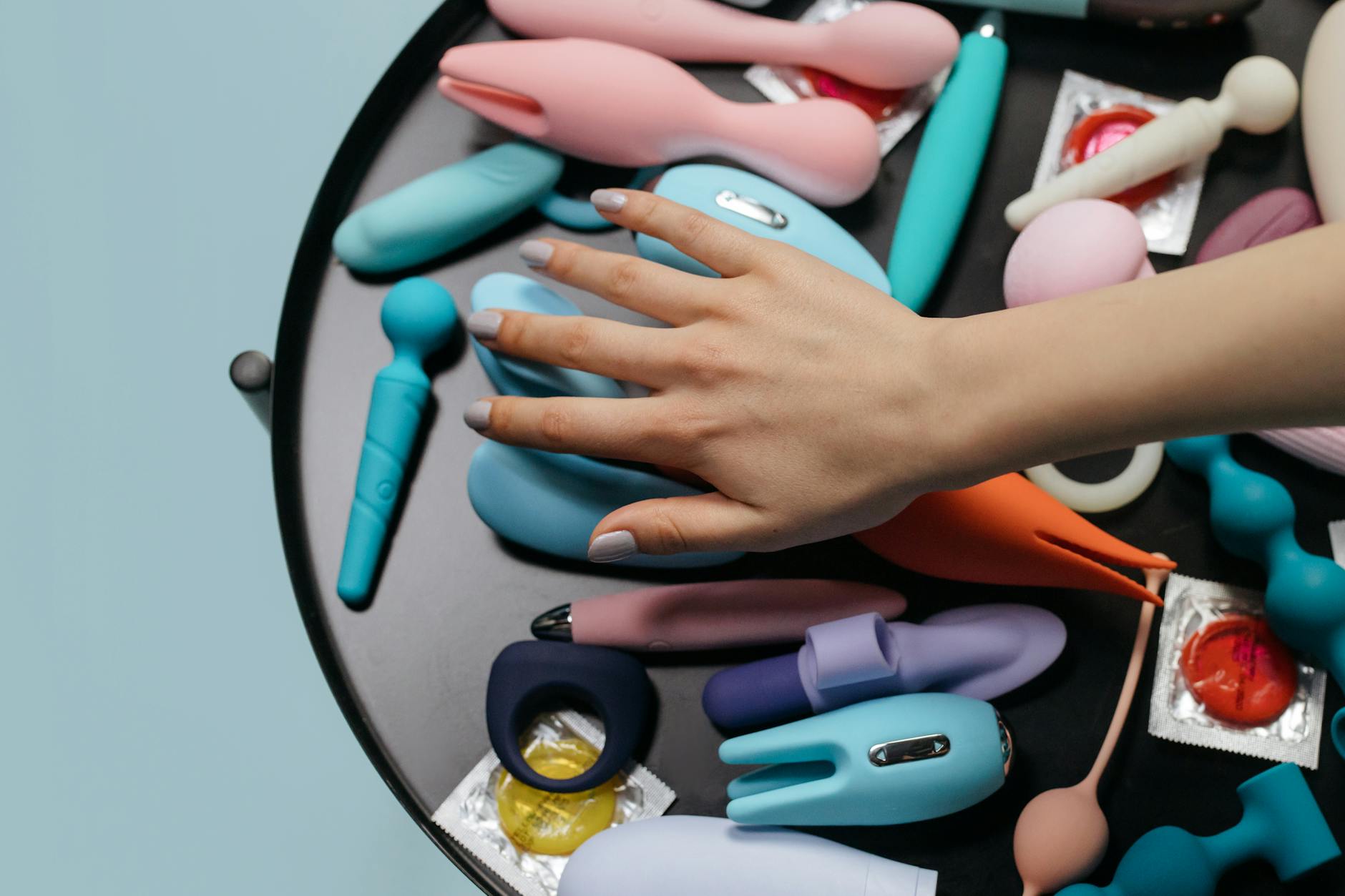
Photo by cottonbro studio on Pexels
Navigating the emotions that come up
Here's what nobody tells you: introducing a vibrator into partnered sex sometimes surfaces feelings that have nothing to do with the vibrator itself.
One partner might feel replaced. ("Does the vibrator feel better than me?") Another might feel suddenly exposed. ("I don't want them to know exactly what I like.")
These feelings are normal. They're not signs that you shouldn't do this. They're invitations to talk about something deeper.
If your partner feels replaced, the answer isn't to put the vibrator away. It's to remind them that a lemon vibrator does one thing beautifully: it delivers sustained, consistent stimulation to the clitoris. Your hands, your mouth, your body do something completely different. They're not in competition. They're in different categories.
If your partner feels exposed, ask why. Sometimes it's about vulnerability (good. That's intimacy.) Sometimes it's about past shame around pleasure. That needs gentler unpacking, maybe with a therapist.
Building a shared pleasure language
The best couples I've worked with develop a vocabulary around lemon vibrators that removes guesswork. You might develop shorthand: "I want the Lem today" or "Let's try pattern 2." You might establish check-ins: "Does the pressure feel good?" "Should I move it?"
This language does two things. It keeps you connected while you're using the toy. It also normalizes talking about pleasure itself, which translates everywhere else in your relationship.
Some couples find it helpful to ask permission in the moment: "Can I use this?" "Want to try something?" Even if you've done it a hundred times, checking in every time removes performance pressure.
Troubleshooting common scenarios
The vibrator isn't working for one of you. That's okay. Not every tool works for every body. Don't force it. Try a different pattern or intensity. If it still doesn't land, move on without making it weird. Come back to it later if curiosity returns. You don't owe the vibrator anything.
One partner wants more intensity than the other can handle. This is a communication issue wearing a vibrator costume. Sit with it. What's driving the desire for more intensity? What's driving the resistance? Often these two things are having a conversation that has nothing to do with the toy.
You used a lemon vibrator once and now your partner wants to all the time. Set a boundary. "I love doing this, and I also want to keep exploring other things." Pleasure variety matters. The vibrator should expand your options, not become the only option.
Someone feels awkward about the whole thing. Stop. Go back to conversation. Don't push. Introducing lemon vibrators only works if both people genuinely want to. Coercion doesn't create intimacy.
Why this actually deepens partnership
Here's what I've seen repeatedly: couples who navigate vibrator introduction together report feeling closer, not just sexually. You've had vulnerable conversations. You've checked in with each other's desires. You've given permission for pleasure. You've witnessed each other in un-guarded moments.
That's not sex. That's intimacy. The vibrator is just the vehicle.
People also ask
Can you use a lemon vibrator during sex if you have a latex allergy?
Yes. Most lemon vibrators, including the Lem by Lem Hello Nancy Shop, are made from medical-grade silicone, which is latex-free. That said, always check the toy's material spec before bringing it into partnered sex. If either of you has a latex allergy, also check your condom material. Lemon vibrators work beautifully with non-latex condoms. If you need more detail on this, we've covered how to use lemon vibrators safely with latex allergies in depth.
What if only one partner wants to try a lemon vibrator?
This is normal. Someone usually initiates. The key is whether the reluctant partner is genuinely uninterested or just nervous. Have the conversation. Ask what they're worried about. If they're truly not interested, respect that. Don't push. If they're nervous, that's different. Nervous people can be brought along gently. Uninterested people can't.
How do you introduce a lemon vibrator if you've been together for years without toys?
The same way you'd introduce anything new: with curiosity, not defensiveness. "I've been reading about this" or "I saw something interesting I want to explore with you" frames this as growth, not dissatisfaction. Long-term partnerships can feel static. Adding novelty isn't criticism. It's a yes to each other.
Is it weird to use a lemon vibrator if you have kids at home?
Not weird. Practical. Lock your bedroom door. Keep the toy in a discreet storage spot. Same boundaries you'd use for anything intimate. Kids complicate privacy, but they don't make couples pleasure shameful. Handle it like the normal adult thing it is.
Should you tell your partner about your lemon vibrator experience if you've used one solo?
That depends on your relationship style. Some couples share everything. Some maintain privacy around solo pleasure. Neither is wrong. But if you're bringing it into partnered sex, transparency helps. "I've tried this alone and I like it" is different from "Surprise, here's a vibrator." One invites collaboration. The other can feel ambushing.
How often should couples use a lemon vibrator?
As often as you both want to. There's no quota. Some couples use lemon vibrators a few times a month. Some use them every time. Some use them for a few weeks and then set them aside. Your pleasure rhythm is yours. Check in periodically: "Are you still enjoying this?" If yes, keep going. If the enthusiasm has shifted, adapt. How long should you wait between using lemon vibrators has more detail on frequency and sensation return if you're curious about that angle.
The real reason to do this
Introducing a lemon vibrator into your partnership isn't about the vibrator. It's about deciding that pleasure, curiosity, and exploration matter enough to be vulnerable about. It's about saying yes to each other in a way that feels risky.
That's what deepens long-term partnership. Not the tool. The permission you're giving each other to want more, try more, and share it.
Start with conversation. Move at the pace that feels good to both of you. And remember: this isn't a performance. It's an experiment. You're allowed to be awkward. You're allowed to laugh. You're allowed to discover something about yourself and your partner that changes how you see each other.
That's the real pleasure here.