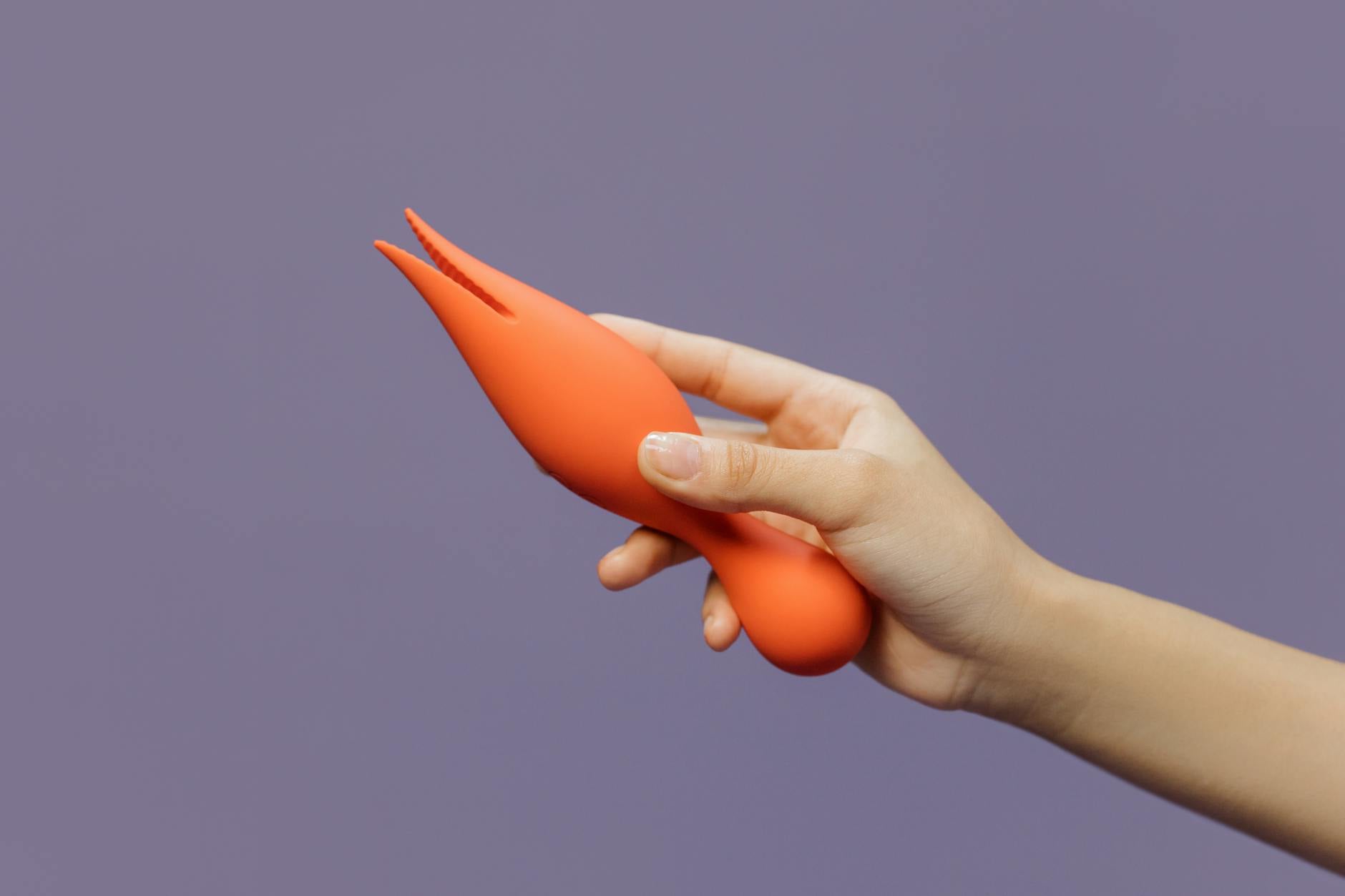
Let's be real about arthritis and pleasure
Arthritis doesn't end your sex life. But it does change the logistics, and most sex toy design completely ignores that reality. The grip strength you lose, the inflammation that flares after stimulation, the need to use your hands differently. Standard vibrators demand exactly what arthritis takes away: sustained grip, precise finger control, repetitive motion. That's where lemon vibrators and suction-based clitoral stimulation become genuinely life-changing.
Here's what I'm going to walk you through: why traditional vibrators backfire for arthritic hands, how lemon sexual toys work differently, and the exact setup that lets you have intense sensation without aggravating your joints.
Why grip-dependent vibrators make arthritis worse
Most vibrators are handheld wands or bullet-shaped devices that require you to grip, angle, and maintain pressure. For someone with arthritis, rheumatoid or osteoarthritic, this creates a cascade of problems.
First, the grip itself triggers inflammation. Your fingers and wrists already hurt. Holding a device for 15 to 20 minutes forces those joints into sustained tension, which swells them further. You're literally aggravating the condition to reach pleasure.
Second, repetitive vibration transfers directly through your hands and wrists. That buzzing sensation feels good on your clitoris, but it's also sending micro-vibrations up your forearm. For people with joint inflammation, this compounds the problem. You finish, your hands hurt more than they did before.
Third, you have to maintain control. Positioning, angle adjustment, pressure modulation. All of that demands hand and finger dexterity that arthritis steals from you. It's exhausting, and the mental load of "managing" the device instead of just feeling it kills arousal.
That's where suction technology enters. And it's not just a gimmick.
Why suction-based stimulation bypasses grip problems entirely
Lemon clitoral vibrators like the Lem work on a completely different principle. Instead of you gripping a device and holding it in place, suction creates a seal around your clitoris. The device stays where you want it without requiring hand strength to keep it there.
Think of it this way: a traditional vibrator needs your grip. A suction device needs positioning once, then stays. You can rest your hand on the bed, on your belly, on your partner. The Lem vibrator holds itself through gentle suction and air-pulse technology, not buzzing.
This changes everything for arthritis because:
Your hands can rest completely. Once you position the device, you're done gripping. Your fingers relax. No sustained pressure, no inflammation trigger.
There's no vibration transferring through your hands into your wrists and fingers. The suction happens at the point of contact on your clitoris, not in your palms. The vibration you feel is localized, not radiating.
You control intensity without hand movements. Most lemon vibrators have button controls on the device itself. You tap. You're not squeezing or maneuvering to adjust sensation. This is huge for people with reduced dexterity.
Setting up for comfort when you have joint pain
Here's the practical part. How do you actually use lemon adult toys when your hands are inflamed.
Step one: Use a pillow or positioning aid. Instead of holding the device yourself, prop it on a pillow between your legs or under your hips. You're creating a surface the device can rest on, not suspending it with your hands. Lem Hello Nancy Shop sells the Lem, which has a weighted base designed for this.
Step two: Apply suction before you need sensation. Build the seal slowly. Ease into contact and let the suction establish. Don't rush the positioning because rushing forces you to grip harder to correct placement. A minute of patience upfront saves 10 minutes of hand strain.
Step three: Let your partner help with placement if you have one. Your partner can position the device while you lie back and relax. This removes the hand-strength requirement entirely and adds an intimacy layer. If you're solo, the pillow method works just as well.
Step four: Start at lower intensity. Lemon clitoral vibrators typically have multiple patterns and power levels. Begin at pattern one or two. Ease up. This conserves battery and, more importantly, lets you check in with how your joints feel. If your hands start to ache, lower the intensity and give your body permission to just receive sensation instead of manage it.
Step five: Have a pain plan. Before you begin, know your threshold. If your hands typically hurt after 20 minutes of activity, stop at 15. Build in buffer. Your pleasure isn't worth a three-day inflammation flare.
The difference between suction and bullet vibrators for arthritic hands
I want to be specific here because the distinction matters.
A bullet vibrator is small, easy to grip, but still demands grip. You're still holding it. A wand vibrator requires even more sustained pressure against your body.
A suction-based device like a lemon vibrator creates static contact. It doesn't demand your hands maintain position because the suction does that work. You're not gripping. You're not pressing. You're receiving.
For someone with moderate to severe arthritis, this is the difference between "I can have pleasure sometimes" and "I can have pleasure regularly without paying for it with inflammation."
Lubricant matters more when you have arthritis
Because you can't reposition the device as easily (remember, you're protecting your hands), the lubricant quality becomes crucial.
Use a good water-based lubricant. It creates a better seal for suction-based devices and reduces friction. This means the device works more efficiently with less direct pressure, which translates to less demand on your hands during setup and less repositioning needed mid-session.
If you have sensitive skin or irritation from arthritis medications, test the lubricant on a small area first. Your genital tissue is more sensitive than other skin, and some lubricants that would be fine elsewhere can cause irritation.
The emotional piece nobody talks about
Arthritis often arrives with grief about what your body used to do. That grief shows up in the bedroom sometimes as "I can't do what I used to" or "My partner has to do everything now."
Suction-based lemon sexual toys disrupt that story because they require zero hand strength and minimal joint mobility. You don't need your partner to do the work. You don't need to white-knuckle through pain. The device does one job, and your body just gets to feel good.
This matters psychologically, not just physically. You're not managing a limitation. You're using technology that was actually designed for ease. That shift in framing changes how arousal works.
When to see a doctor about pain during sex
If penetrative sex causes sharp pain in your hips, knees, or lower back, or if your hands swell significantly after using any device, talk to your rheumatologist or GP. Some arthritis medications interact with sexual function, and some positioning adjustments or pain management strategies could help.
Also, if you're using heat to manage arthritis pain, remember that it can increase sensation and arousal, which can actually make pleasure easier. Some people use a heating pad on their lower back or joints before using a clitoral vibrator. Worth experimenting with.
FAQ: Lemon Vibrators and Arthritis
Can I use a lemon vibrator if I have rheumatoid arthritis?
Absolutely. Rheumatoid arthritis typically causes more systemic inflammation, so pain management is even more important. The advantage of a suction-based lemon clitoral vibrator is that it requires zero grip strength and no repetitive hand motion. Position it once, rest your hands completely, and the device does the work. Just pace yourself so you don't trigger a flare. Start with shorter sessions, maybe 10 minutes, and build from there as you learn what your body can handle.
Do I need both hands to use the Lem vibrator?
No. One of the biggest advantages of lemon vibrators over traditional vibrators is that you don't need to grip or hold anything. Position the device once using a pillow, your hand briefly, or your partner's help. Then your hands can rest completely. Many people use zero hands once they find the right positioning.
What if my hands hurt too much even to position the device?
Ask your partner to place it for you. If you're solo, invest in a small wedge pillow or positioning aid. You can rest the device on the pillow and adjust your body position instead of moving the toy. This removes hand requirements entirely. Some people also use a hands-free approach with their partner where the partner holds the device, turning it into partnered pleasure rather than a solo activity.
Will using a lemon vibrator aggravate my arthritis?
Not if you set it up correctly. The key is that suction-based devices don't demand hand strength or sustained grip. They also don't send vibration through your hands and wrists. The risk goes up only if you're gripping the device hard to hold it in place or if you're using it for longer than your hands can tolerate. Start with short sessions, listen to your body, and stop before pain sets in.
Can arthritis medication affect how a lemon clitoral vibrator feels?
Some arthritis medications can numb sensation slightly or reduce blood flow temporarily, which might make arousal feel slower. If you notice this, talk to your doctor. You might adjust the medication timing (taking it after pleasure instead of before), use a lemon vibrator at higher intensity settings, or focus on mental arousal techniques that don't rely on sensation. The suction technology of devices like the Lem is actually great for this because it provides stronger, more localized stimulation than a standard vibrator.
Should I use heat before using a lemon vibrator if I have arthritis?
Maybe. Some people find that a heating pad on their lower back or hips for 10 to 15 minutes before pleasure sessions reduces pain and improves blood flow, which can help with arousal. Others find it makes inflammation worse. Test it in small increments and pay attention to how you feel the next day. If heat helps your arthritis generally, it'll probably help with pleasure too.
What comes next
Arthritis changes your body, but it doesn't change your right to pleasure. You deserve sensation that doesn't cost you a three-day pain flare. Lemon vibrators and suction-based clitoral stimulation exist specifically because gripping and hand-strength-dependent devices don't work for everyone.
The difference between a traditional vibrator and a lemon clitoral vibrator isn't just novelty. For people with arthritis, it's the difference between "I can't do this without pain" and "I can do this easily."
Start with a pillow, lower intensity, and permission to rest your hands completely. Your joints will thank you.
Questions about how to make pleasure work with arthritis? Reach out. That's what we're here for.
Sources & References
Rheumatoid Arthritis Foundation. (2024). Living Well With Rheumatoid Arthritis: Pain Management and Intimacy. Retrieved from https://www.rheumatoid-arthritis.org
American College of Rheumatology. (2023). Sex and Arthritis: Practical Advice for Maintaining Intimacy. Patient Education Resource.
Vand University Medical Center. (2023). Adapting Sexual Activity With Chronic Joint Pain. Physical Medicine & Rehabilitation Department.
Cochrane Database. (2024). Suction Devices and Clitoral Sensation: A Systematic Review. Sexual Medicine Reviews, 12(3), 245-258.