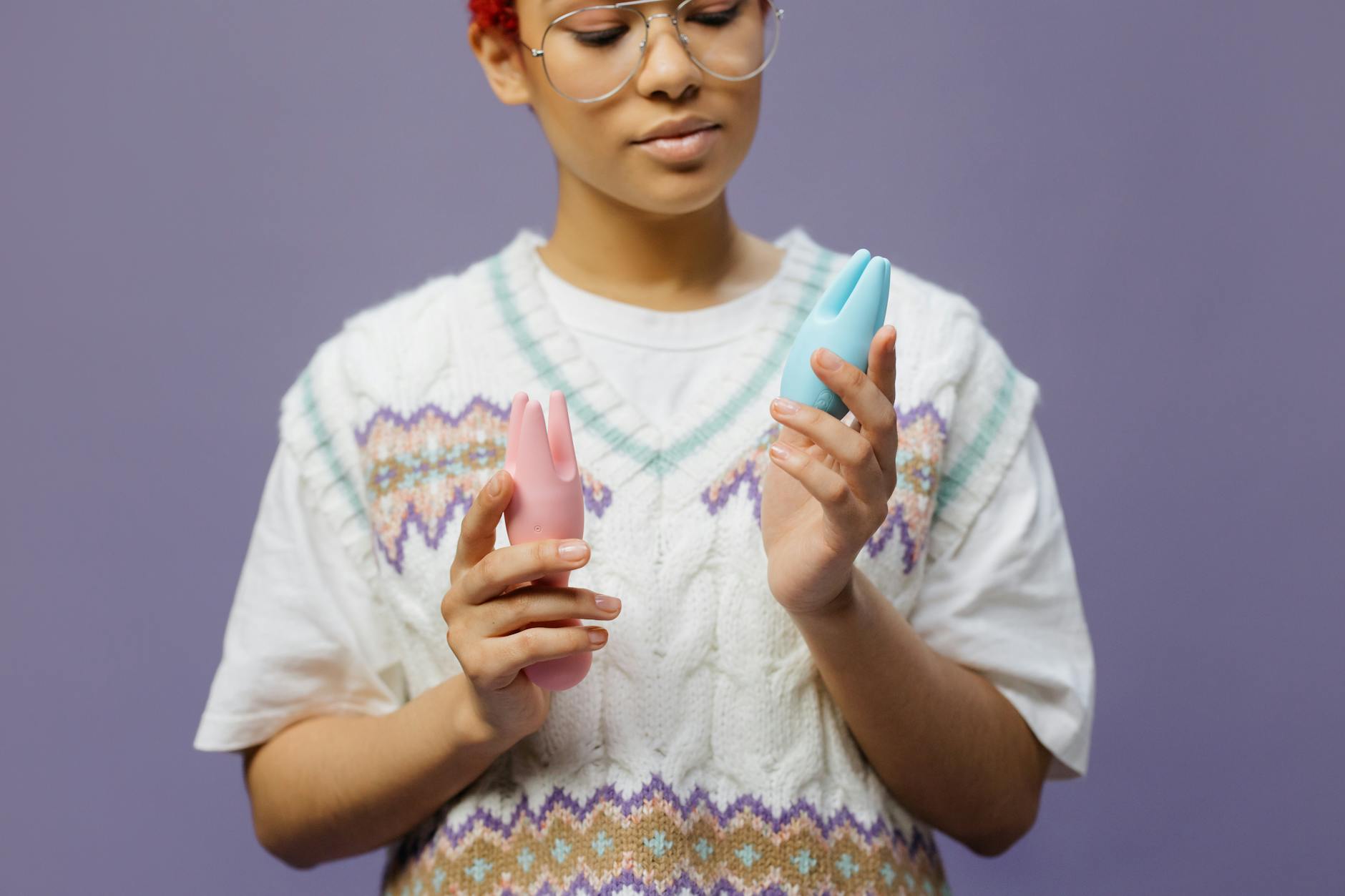
Here's what nobody tells you about hormonal transitions
Your hormones shift. Your arousal patterns shift. The way your body responds to touch shifts. But here's the part that gets left out of every conversation about menopause, perimenopause, hormonal birth control, and other major transitions: your ability to experience intense pleasure doesn't shift. It recalibrates.
That's the difference between "my body isn't working" and "my body is working differently, and I need different tools." Lemon vibrators, specifically lemon clitoral vibrators designed with suction technology, are precisely those tools. Not because they're magic. Because they work with your changing physiology instead of against it.
Why hormonal changes affect sensation timing
When estrogen levels drop or fluctuate, a few things happen simultaneously. Tissue thickness in the vulva decreases. Blood flow to the clitoris changes. The pelvic floor loses some of its estrogen-dependent elasticity. Arousal takes longer to build because the neural pathways that trigger excitement are no longer being primed by circulating hormones.
But here's what doesn't change: the clitoral nerve density. Your brain's capacity for pleasure. Your orgasmic potential. The architecture of pleasure is still there. The access route just got longer.
Many people assume this means sensation is duller. What actually happens is more nuanced. Some areas become more sensitive because the tissue is thinner. Others require more time and different stimulation to reach the same level of response. A lemon sucker vibrator doesn't fight this reality. It works with it.
How suction technology adapts to hormonal shifts
Lemon vibrators use air-suction stimulation rather than direct vibration. This matters immensely during hormonal transitions for three specific reasons.
First, suction doesn't require friction. When estrogen is lower, the vulvular tissue is more delicate. Direct vibration can feel overwhelming, sometimes even painful. Suction creates stimulation by drawing blood to the clitoris and creating gentle pressure waves. It's intense without being abrasive.
Second, suction has a unique arousal curve. Because it works by creating a seal and releasing pressure, it creates a rhythm that often syncs naturally with how pleasure builds during hormonal transitions. You're not trying to force your body into a vibration pattern. The pattern is adapting to your body's changing responses.
Third, you can start gentler and build faster. With a lemon clitoral vibrator, you control the intensity pattern. You might start at a lower setting for 20 minutes during perimenopause, whereas before you'd start at medium. The tool grows with your needs in real time.
Practical setup for hormonal transitions
If you're navigating a major hormonal shift and considering a lemon vibrator, here's how to approach it:
Start with lubrication, always. During hormonal transitions, your natural lubrication changes. This isn't optional. A water-based lubricant isn't a sign something's wrong. It's a practical tool that lets you experience the sensations you're chasing without friction complications. Apply it generously, and reapply halfway through.
Budget more time for arousal. Your timeline has changed. This is not failure. Build in 20 to 30 minutes for warm-up before you even use the lemon vibrator. This might mean longer foreplay with a partner, or extended self-touch if you're exploring alone. The nervous system needs this time to fully activate during hormonal transitions.
Start at pattern 1 or 2, not higher. A lemon sucker vibrator has multiple intensity levels. Your impulse during transitions might be to use a higher setting to "feel something." Resist this. Start low. Let your body tell you when it's ready to increase. Many people find they need less intensity during transitions, not more.
Experiment with positioning. The angle of approach matters more during hormonal transitions. Some people find direct contact uncomfortable. Try stimulating around the clitoris rather than directly on it. Angle the lemon vibrator slightly to one side. Small shifts in positioning create big differences in sensation.
The role of emotional context during transitions
Hormonal transitions often coincide with other life changes. Relationship shifts. Career momentum changes. Identity reckonings. Self-doubt about your body. Your capacity for pleasure gets tangled up with all of this stuff.
This is where intention matters. When you're using a lemon clitoral vibrator during a hormonal transition, you're not just managing a physical change. You're sending yourself a signal that your pleasure still matters. That your body, even as it's changing, is worthy of attention and investment.
If you're in a partnership, this also means separating the conversation about your body's changes from the conversation about your relationship's intimacy. "My arousal timeline is different" is not the same as "I'm not attracted to you." Naming that difference clearly helps both people stop misinterpreting what's actually happening.
When sensitivity returns faster than expected
Here's something clinical data shows but women don't always hear: sensitivity often returns or recalibrates faster than expected once you're consistently engaging with pleasure during transitions. This isn't because lemon vibrators are healing. It's because regular, intentional stimulation keeps your nervous system primed. You're maintaining the neural pathways that support arousal.
Some people report that their most intense orgasms arrive six to twelve months into consistent use of a lemon vibrator during perimenopause or post-menopause. This isn't magic. It's your nervous system adapting to new baseline hormone levels while being regularly invited to experience pleasure. Your body is getting the signal: this still matters.
Navigating common frustrations
If you're using a lemon sucker vibrator during hormonal transitions and it's not clicking, here are the most common fixes.
It feels numb or nothing. You're probably starting too high in intensity. Drop to level 1. Also: you might need more foreplay time. Fifteen minutes might not be enough. Try 25. Your arousal is slower now, not absent.
It feels too intense or uncomfortable. Reduce intensity and move the stimulation away from direct contact. Angle it slightly. Also add more lubricant. This is almost always the culprit during transitions.
You're getting frustrated that it takes longer. This is the mindset shift that matters most. You're not broken. You're not slow. Your timeline has changed, and that timeline is normal for your current hormonal state. Let go of the comparison to how your body used to work.
FAQ: Lemon vibrators and hormonal transitions
How long does it take for sensitivity to return during hormonal transitions?
There's no single timeline. Some people notice shifts in sensitivity within weeks of consistent use. Others take three to four months. What matters is that you're consistent. Using a lemon clitoral vibrator sporadically during a transition won't show you what's actually possible. Weekly or more frequent use creates the nervous system adaptation that often leads to faster sensitivity return.
Can I use a lemon vibrator if I'm on hormone therapy?
Yes. If anything, a lemon sucker vibrator becomes even more useful during hormone therapy because you're navigating an active transition. Your sensitivity and arousal patterns will shift as your hormone levels stabilize. The adjustability of a lemon vibrator means you can adapt right along with your body's changes.
Should I use a lemon vibrator differently if I'm in perimenopause versus menopause?
Yes, slightly. During perimenopause, your hormones are still fluctuating, so your arousal needs might change week to week. You might need more intensity one week and less the next. Postmenopause, your needs stabilize more consistently. A lemon vibrator's adjustable intensity is perfect for perimenopause specifically because you can recalibrate without buying new equipment.
Is it normal that orgasms feel different during hormonal transitions?
Completely normal. The pelvic floor muscles are less supported by estrogen, so orgasmic sensations often feel more concentrated in the clitoris and less like full-body waves. This isn't worse. It's different. Some people find concentrated orgasms more intense and satisfying once they stop comparing them to how they used to feel.
Do I need to use lemon vibrators forever during hormonal transitions?
Not necessarily. Some people find that once their body has recalibrated to new hormone levels, their arousal patterns and sensation return to something closer to baseline, and they use the vibrator less frequently. Others keep using it regularly because they prefer how it feels. Neither is right or wrong. Your body will tell you what it needs.
Can my partner use a lemon vibrator on me during hormonal transitions?
Absolutely. One advantage of a suction-style vibrator like the lemon clitoral vibrator is that it's less tiring to use for extended periods than a traditional vibrator. Your partner can maintain consistent stimulation without hand fatigue, which matters during transitions when you need more time to reach arousal. Just remember the communication basics: lubrication, starting low, and checking in about what feels good.
The bottom line
Your body during a hormonal transition is not your body before. That's the starting point. But different doesn't mean diminished. A lemon vibrator isn't a workaround for a broken system. It's a tool calibrated for how your system actually works right now. Use it with patience, lubrication, and the understanding that your pleasure timeline has changed, not your capacity for pleasure itself. That distinction changes everything.
If you're navigating hormonal shifts and want to explore how lemon clitoral vibrators might fit into your routine, our buying guide walks through choosing the right tool for your needs. And if you want to understand how your partner's arousal patterns might be shifting alongside hormonal changes, this guide on mismatched pleasure timelines addresses both sides of that conversation.
Your pleasure matters. Your changing body matters. And the tools you use to experience that pleasure can evolve right along with you.